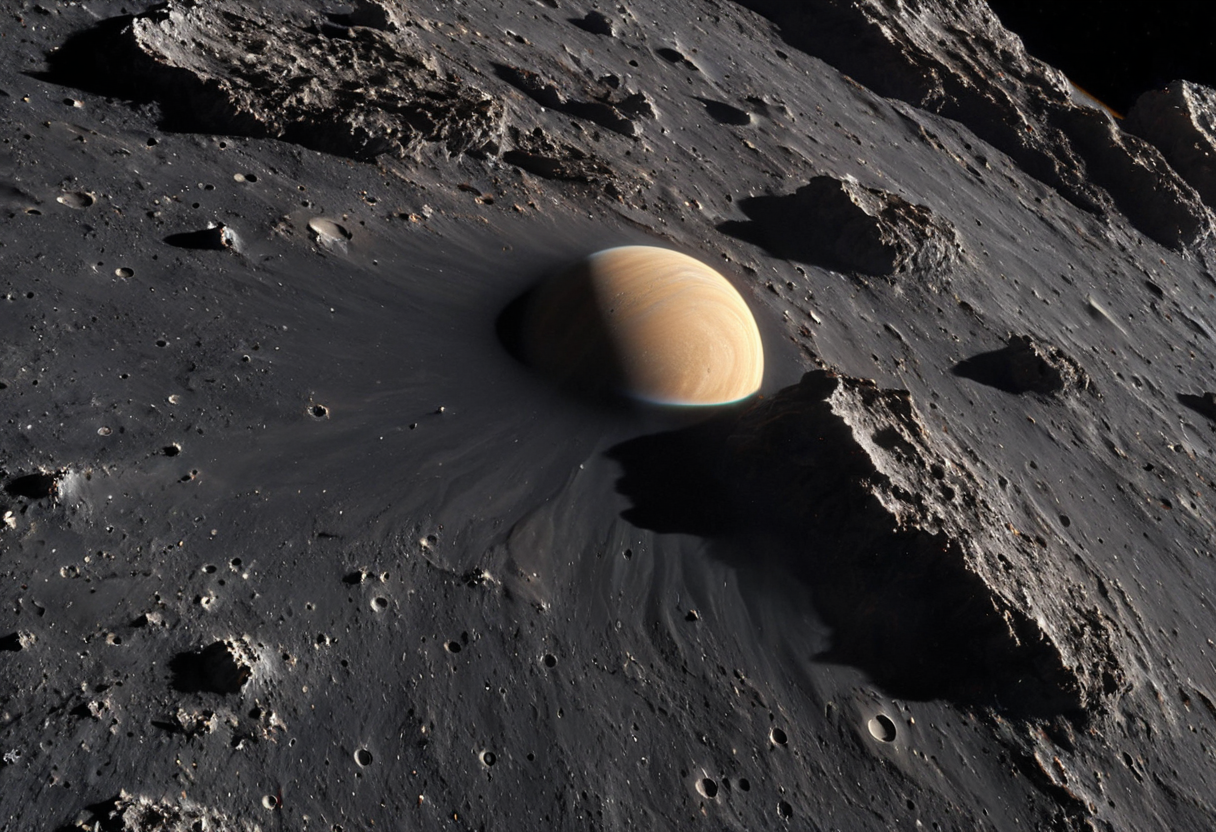
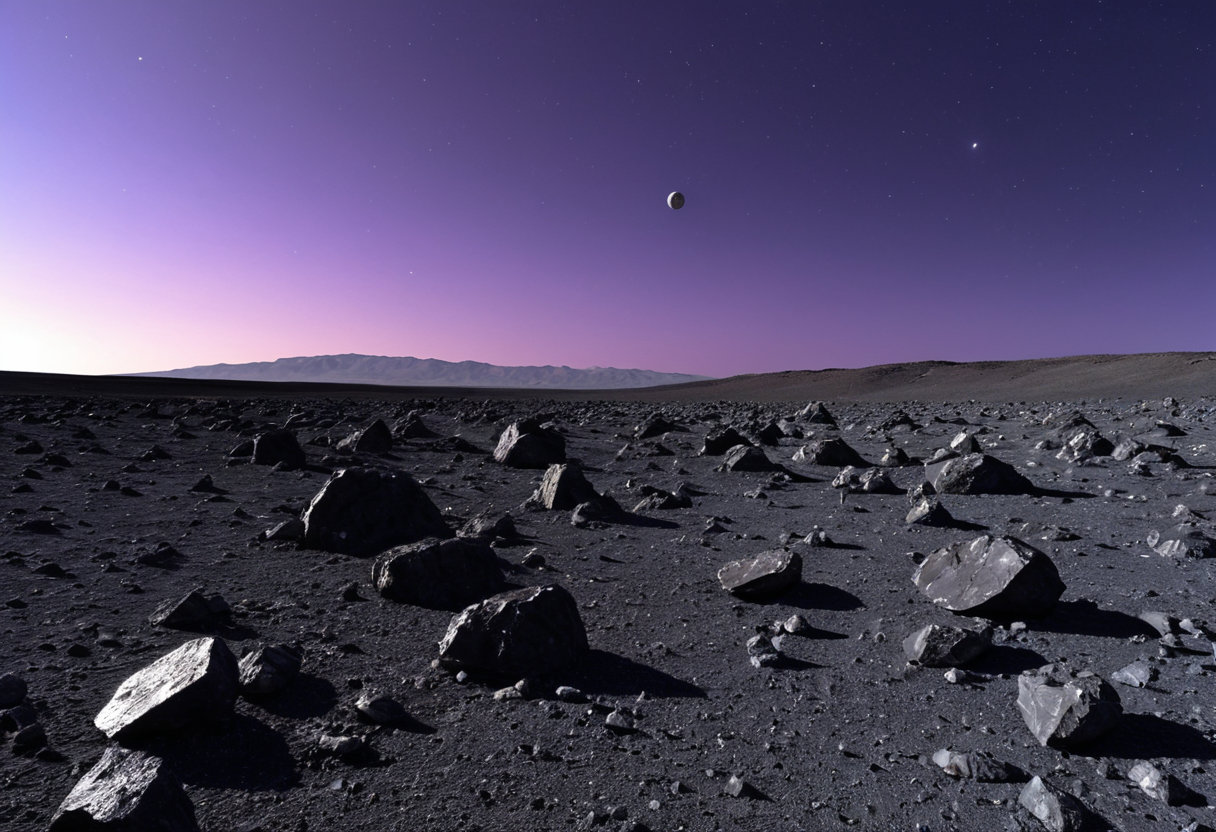
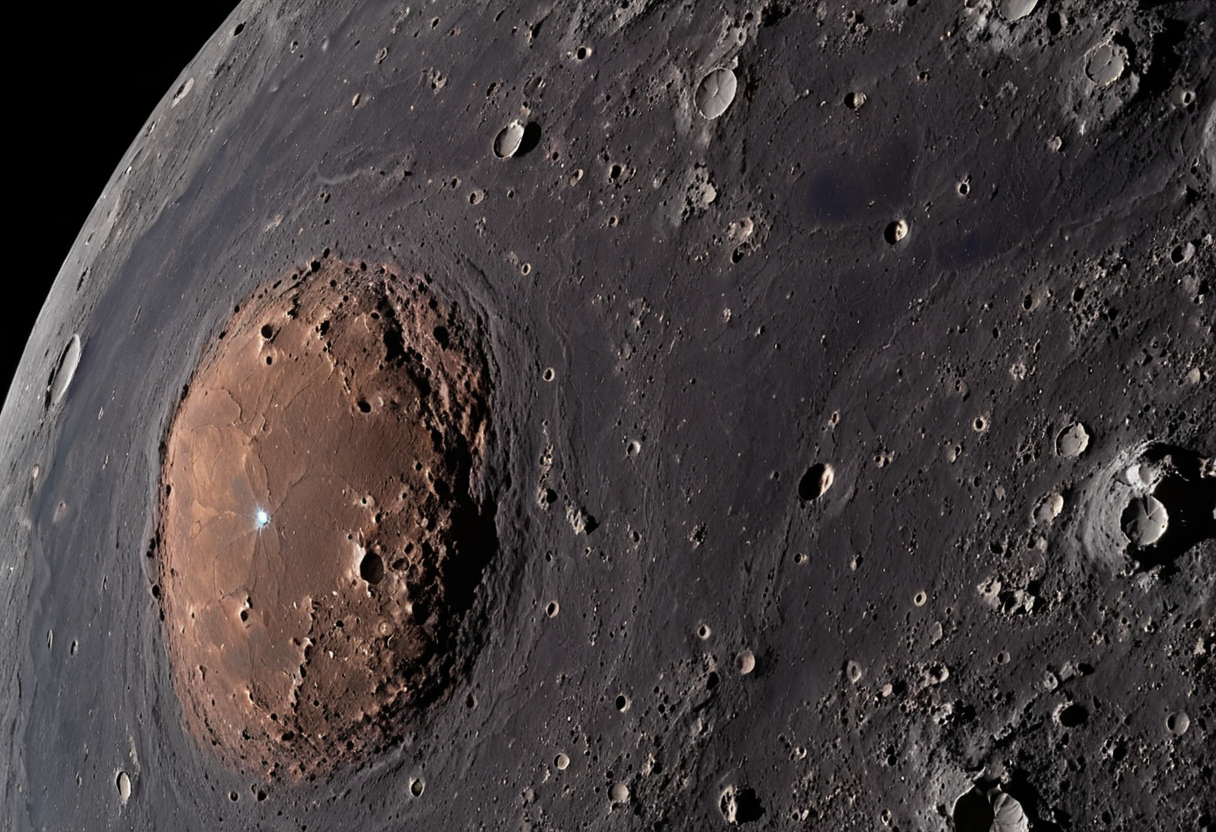
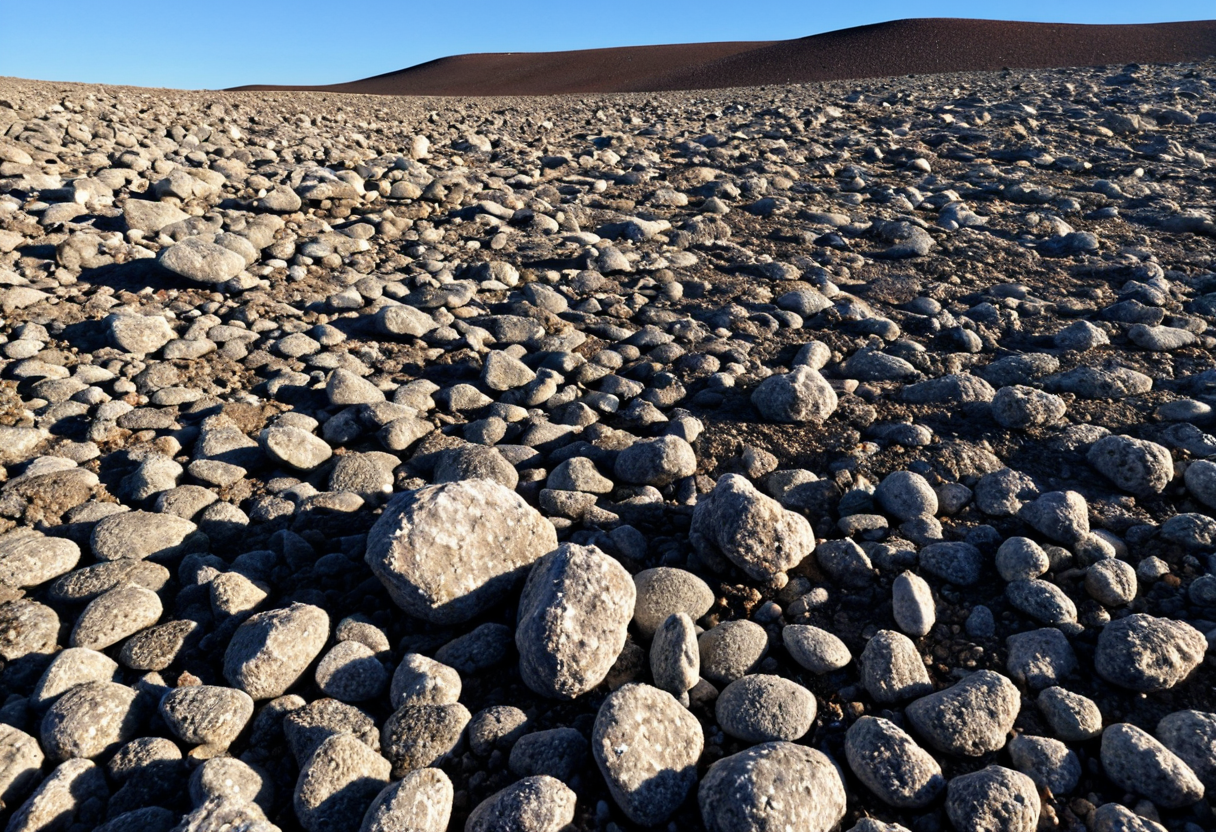
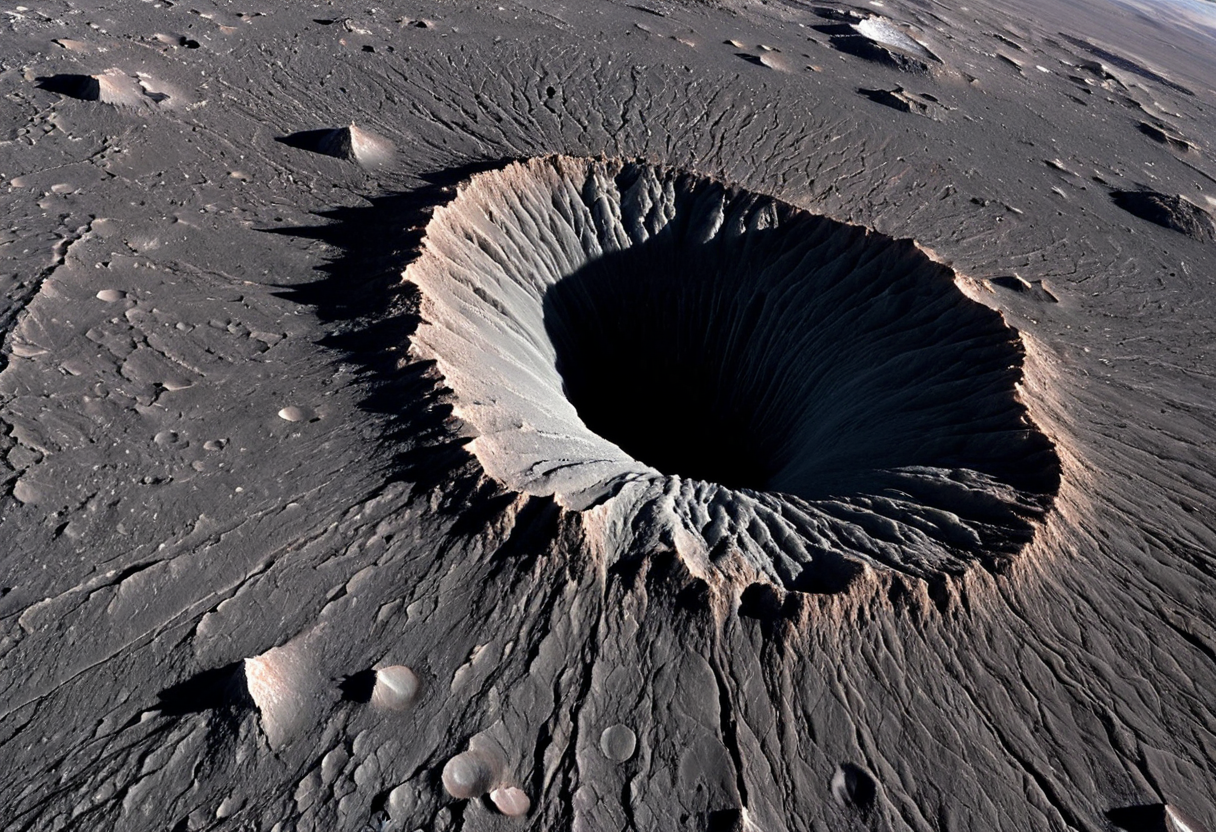
Lithos and Solvent agreed that Korv is not a dead rock — it is a chemically active but structurally locked world whose two living reservoirs cannot exchange material. Lithos opened on Fischer-Tropsch synthesis on metallic iron and conceded the kinetics in round 2: at 158 K the CO dissociation barrier on Fe(110) suppresses bulk F-T by twenty orders of magnitude, but radical-recombination chemistry on radical-doped fayalite and preserved awaruite step edges runs at much lower activation energies and accounts for the slow oligomerization of closed-shell organics raining out of the photolyzed atmosphere. Solvent led with the atmosphere: 9 Gyr of cumulative Lyα drives CO2 and N2 photolysis to produce HCN, formaldehyde, ammonia, and a tholin-like aerosol that settles onto a cold trap where chaotic obliquity drift has migrated the pole over a wide latitudinal band, fractionating the refractory residue into a circumpolar organic deposit at 1 to 10 kg per square meter peak. Both agents converged on isolated H2-saturated sulfate-eutectic brine lenses at 15 to 25 km depth, fed by the relict serpentinization front that consumed less than one percent of the water needed for global hydration and produced about 10^20 kg of hydrogen, most of which has since escaped or remains trapped in grain boundaries. The disagreements that remained were quantitative rather than categorical — what fraction of the photolytic radical flux survives to the regolith, whether microdroplet aerosol chemistry or grain-surface templating writes the chiral signature in the organic belt, how much trapped H2 still buffers the deep brines, and whether sub-Myr obliquity transitions deliver enough cumulative warm-wet time at abandoned cold poles to matter. Both agents concluded plateau: the inventory accumulated, the pipes never connected, and the chemistry will sit there for the remainder of the world's lifetime.
Locked state
{
  "stage": "chemistry",
  "schema_version": 1,
  "active_chemistry_score": 4,
  "dominant_environments": [
    {
      "name": "upper-atmosphere photolysis zone",
      "phase": "gas",
      "temperature_k": 165,
      "pressure_bar": 0.001,
      "key_reactions": [
        "CO2 + hv(121.6 nm) -> CO + O",
        "N2 + hv(<100 nm) -> N + N",
        "N + CH -> HCN + (closed-shell rain)",
        "CN + H2 -> HCN + H",
        "OH + CO -> CO2 + H (recycle)",
        "tholin nucleation from HCN/HCHO/NH3 polymerization in aerosol"
      ],
      "redox_state": "gradient",
      "active": true
    },
    {
      "name": "obliquity-belt cold-trap regolith",
      "phase": "ice",
      "temperature_k": 158,
      "pressure_bar": 0.25,
      "key_reactions": [
        "HCN(s) + HCN(s) -> DAMN tetramer (slow, Q10-suppressed)",
        "HCHO oligomerization on frost matrix",
        "radical recombination on fayalite/awaruite step edges (H, OH, CN, N)",
        "GCR spallation: CO2 + N2 + H2O ices -> HCN, HCHO, amino-acid precursors at 1e-15 mol per ion-pair",
        "seasonal CO2/H2O frost sublimation/recondensation redistributes volatile fraction over refractory tholin matrix"
      ],
      "redox_state": "reducing",
      "active": true
    },
    {
      "name": "isolated deep H2-saturated brine lenses",
      "phase": "liquid",
      "temperature_k": 250,
      "pressure_bar": 4500,
      "key_reactions": [
        "Fe2+/Fe3+ redox buffering against trapped H2",
        "Fe-sulfate/Mg-sulfate eutectic stability at ~250 K freezing point",
        "awaruite-mediated hydride transfer where alloy intersects fluid inclusion",
        "slow serpentinization residue chemistry at lithosphere-asthenosphere relict front"
      ],
      "redox_state": "reducing",
      "active": true
    },
    {
      "name": "stagnant-lid silicate-iron crust (bulk regolith)",
      "phase": "mineral-surface",
      "temperature_k": 158,
      "pressure_bar": 0.25,
      "key_reactions": [
        "alpha-Fe + CO2 -> FeCO3 (siderite passivation, Gyr-cumulative)",
        "fayalitic olivine + H2O(trace) -> serpentine + magnetite (kinetically arrested at 158 K)",
        "awaruite (Ni3Fe) preserved as inactive metallic reservoir at low pCO2"
      ],
      "redox_state": "neutral",
      "active": false
    }
  ],
  "key_species_inventory": {
    "inorganic": [
      "CO2",
      "N2",
      "CO",
      "Ar",
      "H2O(ice)",
      "H2(trapped, fluid inclusions)",
      "FeCO3",
      "Fe3O4",
      "fayalite",
      "hedenbergite",
      "awaruite-Ni3Fe",
      "serpentine",
      "Fe-sulfate",
      "Mg-sulfate"
    ],
    "organic_simple": [
      "HCN",
      "HCHO",
      "NH3",
      "HCOOH",
      "CH4(trace)",
      "C2H2",
      "CN-radical",
      "HC3N"
    ],
    "organic_complex": [
      "HCN polymers (DAMN and beyond)",
      "formaldehyde oligomers",
      "tholin-like nitrogenous macromolecular aerosol",
      "amino-acid precursors (Strecker-initiated, unfinished)"
    ]
  },
  "energy_sources": [
    {
      "name": "stellar UV",
      "magnitude_w_per_m2": 0.6,
      "notes": "Lyα and FUV at 3.448 AU from a quiet 10.69 Gyr G-star; column optical depth tau~700 at 121.6 nm above 50 km homopause. Drives CO2/N2 photolysis and the entire closed-shell organic rain."
    },
    {
      "name": "stellar XUV",
      "magnitude_w_per_m2": 0.02,
      "notes": "Suppressed at this stellar age; sufficient only for slow upper-atmosphere ion chemistry and ongoing H escape. The dynamo at 0.5 B_earth limits direct XUV stripping of the deep atmosphere."
    },
    {
      "name": "radiogenic",
      "magnitude_w_per_m2": 0.04,
      "notes": "25-30% residual radiogenic heat sustains deep convection and keeps the geotherm crossing eutectic brine stability at 15-25 km depth. Surface heat flow conduction-limited under stagnant lid."
    },
    {
      "name": "chemical disequilibrium",
      "magnitude_w_per_m2": 0.001,
      "notes": "1% CO in 0.25 bar atmosphere is two orders above Fe-FeO buffer equilibrium; ~10^20 kg trapped serpentinization H2 in deep grain boundaries provides a structural ΔG against atmospheric CO2 that has no kinetic pipe to close."
    }
  ],
  "cycling": {
    "present": true,
    "type": "seasonal CO2/H2O frost sublimation across the obliquity belt; chaotic obliquity drift redistributes the cold pole over 10 Gyr, fractionating refractory organics by cold-finger sublimation; rare sub-Myr obliquity transitions deliver brief insolation pulses up to ~220-240 K at abandoned cold poles for ~10^8 s cumulative",
    "period_typical": "6.4 yr orbital (frost), 10^7-10^9 yr (obliquity drift)"
  },
  "atmospheric_evolution": "The 0.25 bar CO2/N2 atmosphere is the residue of ~9 Gyr of dry-mantle outgassing followed by photochemical steady-state and slow Fe-carbonate sequestration on the impact-gardened regolith. Cumulative Lyα at tau~700 has photolyzed every CO2 column molecule above the homopause many times over, producing a 1% CO mixing ratio that is two orders above Fe-FeO buffer equilibrium and held there because the mineral floor at 158 K is kinetically too slow to consume CO. N2 photolysis above 100 km plus N+CH/CN+H2 chemistry seeds a closed-shell HCN, HCHO, and NH3 rain that nucleates a tholin-like aerosol; settling under gravity loads the polar/obliquity-belt cold trap with nitrogen-rich macromolecular organics. Free radicals do not survive ballistic transit to the surface in any quantity — the radical flux at the regolith is 2-3 orders smaller than the photolytic production rate aloft. H from H2O photolysis and from leaking deep H2 is XUV-stripped at the homopause; net atmospheric mass is in slow decline but the reservoir is large enough that the next several Gyr are evolutionarily quiet.",
  "subsurface_chemistry": "The mantle is desiccated; serpentinization was a thin reaction front at the lithosphere-asthenosphere boundary in the first Gyr that consumed at most 0.6% of the water needed for global hydration and produced ~10^20 kg of H2, of which 0.1-1% (~10^17-10^18 kg) is still trapped in grain-boundary networks and fluid inclusions at 5-25 km depth. Where the geotherm crosses the Fe/Mg-sulfate eutectic at ~250 K (15-25 km, deeper than a perchlorate world because the grazing impact preferentially stripped Cl), patchy hypersaline brine lenses persist. These brines are H2-saturated, locally reducing, and intersect preserved awaruite (Ni3Fe) reservoirs that resisted the carbonate passivation that destroyed surface alpha-iron. Where alloy meets brine, hydride-transfer catalysis is locally available — exactly the prebiotic-relevant chemistry of Lost-City-analog vent walls — but each lens is sealed by stagnant lid from any atmospheric organic inventory and from every other lens. The deep redox reservoir and the surface organic reservoir do not exchange material on Gyr timescales. The crust between is geochemically dead at 158 K.",
  "prebiotic_potential": {
    "score_0_10": 1.8,
    "rationale": "Korv has accumulated the inventory: a circumpolar obliquity-belt deposit of HCN polymers, formaldehyde oligomers, tholin, and Strecker-initiated amino-acid precursors at 1-10 kg/m^2 peak surface density, all delivered top-down by atmospheric photochemistry and supplemented through-volume by GCR spallation in the top meter of regolith. It also has a deep reduced reservoir: H2-saturated sulfate-eutectic brine lenses at 15-25 km depth in occasional contact with preserved awaruite catalyst. Both sites individually carry the chemistry that prebiotic models want. The structural problem is that they cannot talk. The warm wet site has no atmospheric organics; the rich organic site is at 158 K with only seasonal frost sublimation to mobilize anything. Sub-Myr obliquity transitions deliver brief 220-240 K insolation pulses at abandoned cold poles for ~10^8 s cumulative over 10 Gyr — non-zero, but orders short of what is needed to close an autocatalytic cycle in a thin ephemeral liquid film. The chemistry happened, and then it sat there.",
    "limiting_factor": "no sustained liquid solvent in contact with the accumulated organic inventory; the two chemically alive reservoirs are structurally isolated"
  },
  "unresolved_tensions": [
    "Aerosol-microdroplet versus grain-surface oligomerization as the locus of selective initiation (chirality, heteroatom positioning, ring closure). Solvent argues microdroplet air-water interfaces (Zare-class chemistry, 10^3-10^6x bulk rates on second residence times) write the selectivity and grain surfaces extend it; Lithos argues residence is too short and substrate-templated grain-surface chemistry dominates. Likely sequential; the chiral signature carries one author.",
    "H2 retention fraction in deep grain-boundary networks over 9 Gyr. Solvent committed to 0.1-1% retention (10^17-10^18 kg trapped); Lithos did not pin a number. The brine ΔG depends on this directly.",
    "Whether sub-Myr chaotic obliquity transitions deliver enough cumulative >200 K time at the abandoned cold pole to do real solution-phase chemistry. Both agents agreed it is non-zero but insufficient to close an autocatalytic cycle. The integrated wet-warm budget remains unquantified.",
    "Awaruite catalytic lifetime at 158 K under 0.25 bar CO2 over 9 Gyr. Frost & Beard support metallic preservation at low pCO2, but a clean number for Ni3Fe passivation kinetics on Gyr timescales is not in hand.",
    "Whether Korv's obliquity-belt organic reservoir carries a measurable chiral excess from microdroplet selectivity or from circular-polarized stellar UV at high latitudes (Bailey/Meierhenrich pathway). Not resolvable in two rounds; the most astrobiologically significant open question on this world."
  ],
  "plateau": true,
  "plateau_reason": "Two chemically alive reservoirs accumulated genuine prebiotic inventory over 9 Gyr — a circumpolar obliquity-belt deposit of nitrogen-rich macromolecules at 1-10 kg/m^2 from atmospheric photochemistry and GCR spallation, and isolated H2-saturated awaruite-bearing brine lenses at 15-25 km depth from relict serpentinization. Neither connects to the other. The surface site is at 158 K with only seasonal frost cycling and rare sub-Myr obliquity insolation pulses; the deep site is sealed by stagnant lid from the organic inventory above. No mechanism produces sustained liquid contact between the warm wet redox reservoir and the rich organic reservoir, and the grazing-impact-set composition forecloses both plate tectonics and a global ocean for the body's remaining lifetime. The chemistry has happened. It will not progress."
}