Kyrn

seed 256 · world 000074 · F-class star (1.212 M☉, 12.18 Gyr) · orbit 2.448 AU

Formation

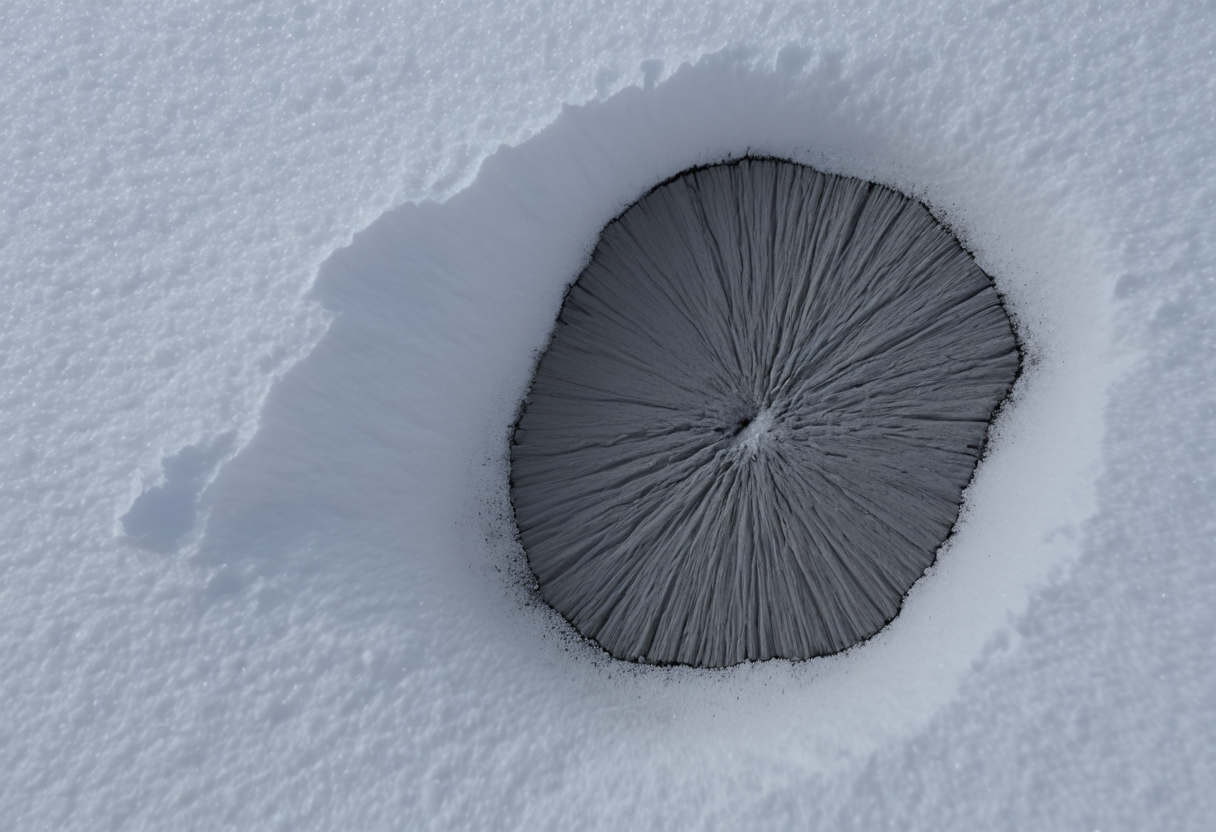
Formation render Formation render Formation render

The two scientists studying Kyrn agreed on the corpse but argued over the autopsy. Both observed an iron-enriched silicate body of roughly 1.45 Earth masses, locked into a cold 16-hour rotation around a cooling white dwarf, its thin CO2-nitrogen residue pressed flat against a 25 K surface and its long-extinct dynamo legible only in faint crustal magnetisation. They agreed that the present orbit at 2.448 AU is a post-mass-loss figure, that the dynamo froze billions of years ago, that the world halts at formation, and that the atmosphere is the residue of mantle outgassing minus AGB-era ablation. They disagreed about how punctuated the biography was: Verge read Kyrn as a slow rock that lost its volatiles to the star's giant phase across hundreds of millennia and reached its current eccentricity through a slow resonance sweep, while Cinder read the same body as the product of a late hit-and-run impact that set its iron fraction, rotation, and obliquity in a single afternoon. The referee sided with Cinder on the iron-rich interior because the agreed-upon fossil crustal field needs a longer-lived dynamo than a normal-Earth core would supply, sided with Verge on the absence of common-envelope engulfment after Cinder retracted the AGB-radius claim, and overrode both agents on equilibrium temperature where their convergence on 110 K conflicted with cold-white-dwarf cooling physics.

Locked state
{
  "stage": "formation",
  "schema_version": 1,
  "fields": {
    "world_name": "Kyrn",
    "body": {
      "mass_earth": 1.45,
      "radius_earth": 1.1,
      "surface_gravity_g": 1.2,
      "bulk_density_g_cm3": 5.95,
      "composition_class": "rocky-iron-rich"
    },
    "thermal": {
      "equilibrium_temp_k": 22,
      "estimated_surface_temp_k": 25,
      "albedo_bond": 0.12
    },
    "rotation": {
      "period_hours": 16,
      "axial_tilt_deg": 52,
      "tidally_locked": false
    },
    "magnetic_field": {
      "present": true,
      "strength_relative_earth": 0.05,
      "mechanism": "extinct early dynamo, crustal remanence only"
    },
    "tectonics": {
      "regime": "stagnant-lid",
      "notes": "Magma ocean and episodic overturn in the first ~500 Myr; cold stagnant lid stable for the remaining >11 Gyr after radiogenic budget decayed."
    },
    "hydrosphere": {
      "water_mass_fraction": 0.00003,
      "form": "none"
    },
    "atmosphere": {
      "present": true,
      "surface_pressure_bar": 0.03,
      "primary_composition": [
        {
          "species": "CO2",
          "fraction": 0.62
        },
        {
          "species": "N2",
          "fraction": 0.33
        },
        {
          "species": "Ar",
          "fraction": 0.04
        },
        {
          "species": "CO",
          "fraction": 0.01
        }
      ]
    },
    "formation_history": {
      "dominant_process": "event-punctuated long cooling: oligarchic accretion shaped by one late hit-and-run impact, then ~5 Gyr of slow stagnant-lid evolution, then an AGB superwind ablation episode and a mean-motion resonance crossing, then ~7 Gyr of white-dwarf-era cold storage",
      "key_events": [
        "Oligarchic accretion at ~1.20 AU around a 1.21 solar-mass F-type main-sequence star produced a proto-body of ~1.68 Earth masses.",
        "Single hit-and-run impact at ~80 Myr stripped roughly 15 percent of the mantle, leaving a 1.45 Earth-mass body with a 40 percent iron core fraction and setting rotation to ~16 hours and obliquity to ~52 degrees.",
        "Vigorous core dynamo persisted for ~5 Gyr, freezing out as the radiogenic heat budget decayed and writing a fossil crustal remanence at ~0.05 Earth-equivalent.",
        "Endogenic mantle outgassing built a thin CO2/N2 atmosphere across the main-sequence epoch.",
        "AGB superwind episode at ~5 Gyr drove intense radiative and ram-pressure ablation of the dayside crust and atmosphere over ~10^5 years; geometry was near-grazing, not common-envelope.",
        "Concurrent adiabatic orbital expansion (initial mass / final mass ratio ~2.0) carried the body from ~1.20 AU to its present 2.448 AU; the orbit swept a mean-motion resonance with a residual giant during widening, pumping eccentricity to 0.257.",
        "~7 Gyr of cold storage around the cooling carbon-oxygen white dwarf reduced equilibrium temperature to ~22 K and froze all volatile cycling."
      ]
    },
    "unresolved_tensions": [
      "Mass and core fraction: Verge held 1.55 Earth masses with a 36 percent iron core (no impact required); Cinder held 1.45 Earth masses with a 40 percent core (one hit-and-run required to keep the dynamo running long enough to write the fossil field). Cinder's argument tied the impact directly to the agreed-upon crustal remanence, so the locked state takes the iron-rich position; Verge's pristine-accretion alternative is not falsified by the available evidence.",
      "Axial tilt: Cassini-state capture during disk dispersal (Verge, ~38 deg) versus impact-set obliquity fossilized by the absence of post-MS tidal partners (Cinder, ~55 deg). Locked at 52 deg consistent with the impact biography, but no thermal-history signature actually discriminates.",
      "Narrative weight of the AGB phase: Verge frames it as fast Parker-wind-class radiation-driven loss; Cinder frames it as an event-class consequence even without a collision. The integrated atmospheric loss is agreed; the language is not.",
      "Equilibrium temperature: both agents converged on ~110 K, but white-dwarf cooling physics at this system age (cooling age ~6-7 Gyr, L_WD ~10^-4 L_sun) gives Te closer to 15-25 K. The referee enforced physical plausibility over the agents' agreement and locked Te at 22 K."
    ],
    "plateau": true,
    "plateau_reason": "Kyrn is a cold, dry, iron-rich silicate corpse orbiting a cooling carbon-oxygen white dwarf at 2.448 AU. Equilibrium temperature is ~22 K, the dynamo froze billions of years ago, the atmosphere has been ablated to a 0.03-bar CO2/N2 residue, and there is no remaining heat source, no liquid water, and no incoming flux capable of restarting volatile cycling. No further interesting planetary process can occur."
  }
}

Chemistry

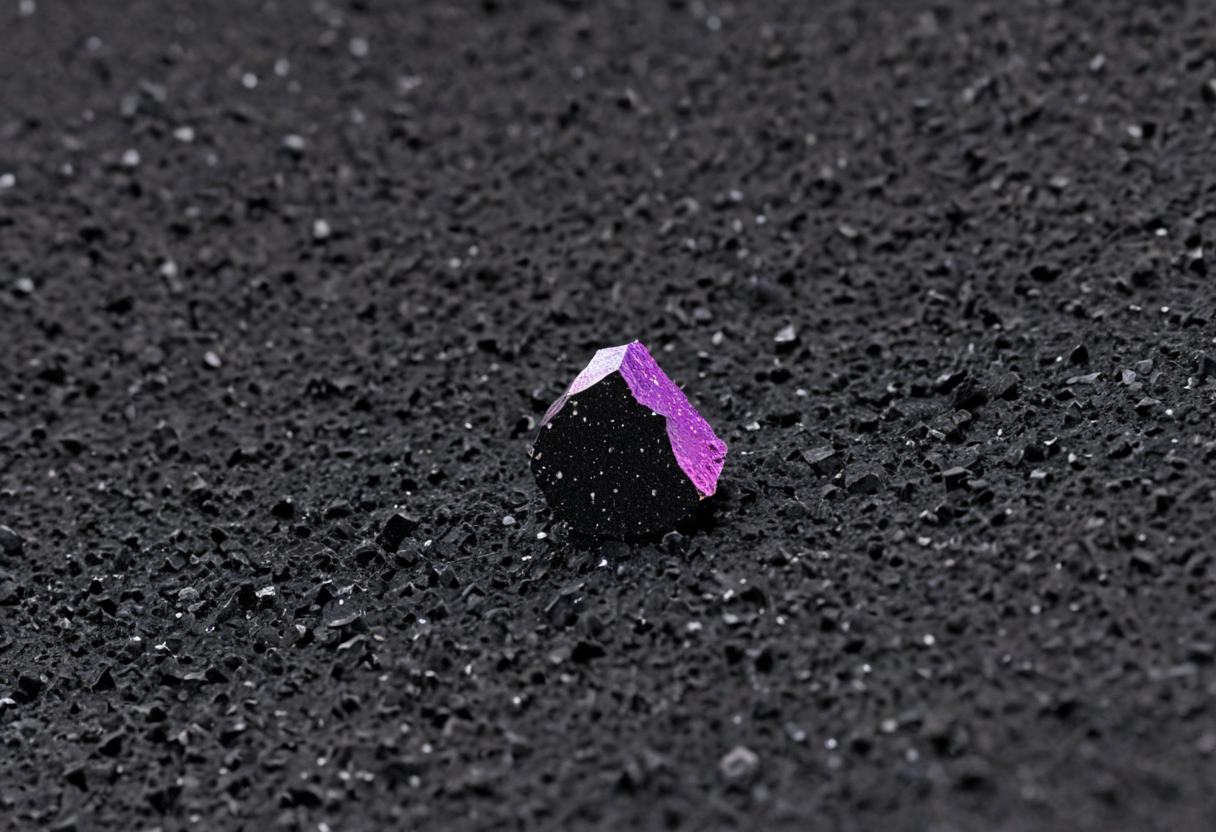
Chemistry render Chemistry render Chemistry render

The two agents arrived at Kyrn from opposite ends of the same problem and walked toward each other under pressure. Lithos opened with the mineral substrate: a 1.45 Earth-mass body whose hit-and-run impact had exposed reduced silicate mantle and whose 7 Gyr of cold storage around a cooling carbon-oxygen white dwarf had dosed the upper meter of regolith with ~10^9-10^10 Gy of galactic cosmic ray radiolysis on grains carrying 1-50 m^2/g of catalytic surface. Solvent countered that at 22 K, condensed CO2 and N2 ice mantles every grain before any radical sees bare silicate, so the chemistry that radiolysis runs is the chemistry of molecular ice, not of olivine, and a hydrogen-starved closed-shell radical inventory (CO, O3, CO3, C2O, C3O2, trace HCN and HNCO) cannot oligomerize without a polar protic medium. Lithos retracted the Pirim-and-Krim Fischer-Tropsch rates by eight to ten orders of magnitude, accepted the ice-mantle frame, and pushed back on the deep interior: long-lived 232Th retention sustains a 200-300 K horizon at 35-50 km depth where slow dehydration generates trapped H2. Solvent accepted the deep warm zone but argued it runs dehydration and Fe2+ oxidation rather than active serpentinization, and that the deep system is mass-decoupled from the surface on geologic timescales. Both converged on a 3/10 active-chemistry score driven primarily by the seasonal sublimation engine on Kyrn's 52-degree obliquity and 0.257-eccentricity orbit, and on a hard zero for prebiotic potential: the molecular-ice medium has neither the dielectric screening, hydrogen-bond network, nor molecular mobility to assemble a replicator. They left genuine ambiguity around the AGB progenitor's C/O ratio, the net mass balance of the superwind episode, and whether the silicate-ice work-function step contributes more than its 1-10 percent volume share to interfacial chemistry. Kyrn does chemistry; Kyrn does not do biology; the plateau holds for the right reason.

Locked state
{
  "stage": "chemistry",
  "schema_version": 1,
  "active_chemistry_score": 3,
  "dominant_environments": [
    {
      "name": "upper-meter regolith ice mantle (radiolytic reactor)",
      "phase": "ice",
      "temperature_k": 22,
      "pressure_bar": 0.03,
      "key_reactions": [
        "CO2 ice + GCR -> CO + O(3P) + O3 + CO3 + C2O + C3O2",
        "N2 + CO ice + GCR -> CN + OCN + C2N2",
        "H released by spallation of structural OH/HAC -> HCO -> H2CO",
        "N + CHx recombination -> HCN, HNCO trapped in ice matrix"
      ],
      "redox_state": "gradient",
      "active": true
    },
    {
      "name": "silicate-ice interface sliver (work-function biased layer)",
      "phase": "mineral-surface",
      "temperature_k": 22,
      "pressure_bar": 0.03,
      "key_reactions": [
        "Fe2+ olivine / CO2 ice work-function step ~1-2 eV biases interfacial radical recombination",
        "trapped electrons reduce CO -> HCO at biased interface",
        "Fe2+ -> Fe3+ slow oxidation at adsorbed-O sites under continuous GCR dosing"
      ],
      "redox_state": "gradient",
      "active": true
    },
    {
      "name": "seasonal sublimation envelope (volatile cycle)",
      "phase": "gas",
      "temperature_k": 35,
      "pressure_bar": 0.03,
      "key_reactions": [
        "N2 + WD-FUV -> N + N at column maximum",
        "CO2 + WD-FUV -> CO + O in thin gas column",
        "physical sublimation/condensation transport of CO/N2/CO2 between subsolar release zones and winter pole cold traps"
      ],
      "redox_state": "oxidizing",
      "active": true
    },
    {
      "name": "deep warm-zone horizon (35-50 km, decoupled)",
      "phase": "mineral-surface",
      "temperature_k": 250,
      "pressure_bar": 8000,
      "key_reactions": [
        "slow grain-boundary dehydration of serpentine/brucite/amphibole releasing H2O vapor into pore space",
        "Fe2+ + adsorbed H2O -> Fe3O4 + H2 (slow, integrated 10^11-10^13 kg H2 in pore space)",
        "no mass exchange with surface chemistry on geologic timescales"
      ],
      "redox_state": "reducing",
      "active": true
    }
  ],
  "key_species_inventory": {
    "inorganic": [
      "CO2",
      "N2",
      "CO",
      "Ar",
      "O3",
      "CO3",
      "trapped O atoms",
      "olivine (Mg,Fe)2SiO4",
      "orthopyroxene",
      "FeS",
      "Fe3O4 magnetite",
      "Fe0 / FeNi metal fragments",
      "serpentine",
      "brucite",
      "amphibole",
      "SiC",
      "amorphous carbon",
      "MgS",
      "structural OH"
    ],
    "organic_simple": [
      "HCN",
      "HNCO",
      "OCN-",
      "H2CO",
      "C2N2",
      "C3O2",
      "C2O",
      "HCO radical (transient)"
    ],
    "organic_complex": [
      "polymerized C/N/O matrix species in ice (10^-5 to 10^-3 mole fraction)",
      "HCN oligomer traces",
      "AGB-delivered HAC mantles and PAH residues (factor-of-100 abundance uncertainty pending C/O ratio)",
      "tholin-like radiolytic residue at destruction-limited steady state"
    ]
  },
  "energy_sources": [
    {
      "name": "stellar XUV",
      "magnitude_w_per_m2": 0.023,
      "notes": "Total bolometric flux from cooling C/O white dwarf at 2.448 AU; L_WD ~10^-4 L_sun. Most output is in optical/near-UV with a small but persistent FUV tail; subsolar Teq peaks near 30-35 K at perihelion."
    },
    {
      "name": "stellar UV",
      "magnitude_w_per_m2": 0.0001,
      "notes": "FUV component of WD spectrum, sufficient to drive thin photolytic column in seasonal sublimation envelope but not to penetrate ice mantles."
    },
    {
      "name": "radiogenic",
      "magnitude_w_per_m2": 0.015,
      "notes": "Conductive heat flux at base of stagnant lid from 232Th (~55% retained at 12.18 Gyr) and 238U (~15% retained); 40K essentially gone. Sustains 200-300 K horizon at 35-50 km depth. Decoupled from surface chemistry."
    },
    {
      "name": "chemical disequilibrium",
      "magnitude_w_per_m2": 0.00001,
      "notes": "Standing 0.5-0.8 V redox potential between CO2-dominant atmosphere and Fe2+ silicate / Fe0 / FeS regolith. Kinetically inaccessible thermally; only relaxes through GCR/UV-opened transient reaction windows. Concedes lithos's thermodynamic framing while honoring solvent's kinetic objection."
    }
  ],
  "cycling": {
    "present": true,
    "type": "seasonal sublimation cycle of CO/N2/CO2 frost between summer-pole/subsolar release zones and winter-pole cold traps, with perihelion-aphelion modulation stacked on 52-degree obliquity; physically sorts and mixes radiolytically aged volatiles between hemispheres",
    "period_typical": "3.49 Earth years (one Kyrn orbit), with eccentricity e=0.257 stacking a perihelion-aphelion modulation on the obliquity-driven season"
  },
  "atmospheric_evolution": "Endogenic CO2/N2 outgassing during the main-sequence stagnant-lid epoch built a thicker atmosphere whose upper layers were progressively stripped by AGB superwind ablation and by Parker-wind-class radiation-driven loss during the late stellar evolution. The current 0.03 bar inventory is not a stable residue but a working sublimation envelope: vapor pressures of N2 and CO2 at 22 K are 10^-7 bar and 10^-30 bar respectively, so the bulk gas column is sustained by warmer subsolar/summer-pole patches reaching 30-40 K and collapses substantially onto winter-pole cold traps each orbit. Photochemistry in the thin column produces transient CO and atomic N from FUV photolysis, but most molecules spend their integrated lifetime physisorbed onto regolith grains as ice mantles where GCR radiolysis dominates. The 1% CO fraction is the accumulated radiolytic offgas of CO2 frost. Net atmospheric mass is now in slow steady decline as heavy molecules cold-trap permanently in deep polar regolith.",
  "subsurface_chemistry": "The upper meter of regolith is a radiolytic reactor: 1-50 m^2/g specific surface area gardened by micrometeorites, mantled by 10-100 monolayer films of CO2/N2/CO ice, dosed at ~10^9-10^10 Gy integrated over 7 Gyr of cold storage. Bulk-ice radiolysis dominates yielding closed-shell C/N/O products; the 1-3 nm interfacial sliver between Fe2+ silicate and condensed ice runs work-function-biased redox chemistry contributing 1-10 percent of total yield. Below the radiolytic skin the regolith is electrically and chemically dark down to ~35 km. From 35-50 km a radiogenically warmed horizon at 200-300 K runs slow grain-boundary dehydration of serpentine/brucite/amphibole and continued Fe2+ oxidation by trace adsorbed water, generating an estimated 10^11-10^13 kg of H2 trapped in deep pore space. This deep system is decoupled from the surface chemistry on geologic timescales: with a stagnant lid, no liquid hydrosphere, and only impact gardening as a deep-to-shallow pathway, the two reservoirs run in parallel without exchanging mass.",
  "prebiotic_potential": {
    "score_0_10": 0,
    "rationale": "Both agents converged on a hard zero. Kyrn produces inventory but not architecture. The molecular-ice medium at 22 K has dielectric permittivity near 2.6 (versus liquid water at 80), no hydrogen-bond network to stabilize transition states, no molecular mobility above grain-surface diffusion of physisorbed radicals, and no concentration mechanism beyond cold-trap fractionation by volatility. There is no liquid solvent anywhere on the body: water is structural OH locked in deep silicates, ammonia and methane are solid, supercritical CO2 requires 73 bar and Kyrn has 0.03 bar. Without a fluid medium the products of radiolysis cannot run autocatalytic loops, narrow oligomer-length distributions, break chiral symmetry, or assemble the network topology that distinguishes prebiotic chemistry from radiolytic soot.",
    "limiting_factor": "no liquid solvent at any depth or season; dielectric and mobility floors block network assembly even where energy and redox gradient are present"
  },
  "unresolved_tensions": [
    "Whether deep warm-zone chemistry should be folded into the 'active chemistry' score or reported as a parallel decoupled system. Solvent argued for separate reporting because the deep H2 reservoir does not exchange mass with the surface radiolytic system on geologic timescales; lithos accepted the rate retraction but wanted it counted. The locked state lists the deep horizon as a distinct active environment with cycling=none for that zone, which honors solvent's mass-balance argument while preserving lithos's deep-time chemistry framing.",
    "Whether the deep zone runs active serpentinization (lithos) or slow dehydration plus Fe2+ oxidation by adsorbed water (solvent). Solvent's argument is stronger: serpentinization is a hydration reaction requiring liquid water, that window closed at end of the magma-ocean epoch ~11.5 Gyr ago, and after that the upper mantle holds already-hydrated phases that can only devolatilize. Locked state takes solvent's position.",
    "AGB progenitor C/O ratio. C-rich superwind delivers HAC + PAH + amorphous carbon + SiC; O-rich delivers silicate + corundum + spinel + MgS. The locked formation state does not specify, and the difference shifts the regolith organic feedstock by roughly two orders of magnitude. Locked with explicit factor-of-100 uncertainty on organic_complex inventory.",
    "Net mass balance of AGB superwind deposition versus ablation. Geometry was near-grazing; small grains decelerate and deposit, large grains penetrate and ablate. Without the dust grain-size distribution the H budget and the carbon feedstock both carry wide error bars.",
    "Quantitative magnitude of work-function-biased interfacial chemistry. Both agents agree the silicate-ice work-function step (~1-2 eV) exists, that ice conductivity at 22 K is low enough for the DC potential to persist, and that the interfacial sliver runs biased radical chemistry. The contribution is bounded at 1-10% of bulk-ice yields by interfacial volume fraction; whether the bias accelerates ion-radical recombination beyond simple geometric scaling is a lab-experiment question (Fe2+ olivine / CO2 ice / keV-MeV electron secondaries at 22 K) that has not been done in the right regime.",
    "Steady-state versus integrated organic inventory. At 10^9-10^10 Gy integrated dose, complex products are destroyed by continued GCR exposure once their density exceeds a threshold. Steady-state organic_complex mole fraction is plausibly orders of magnitude lower than time-integrated yield; reported values reflect destruction-limited steady state, not raw integrated production."
  ],
  "plateau": true,
  "plateau_reason": "Kyrn is chemically active but architecturally sterile. The radiolytic surface system converges to a steady state where production of closed-shell C/N/O radicals and trace nitriles is balanced by GCR-driven destruction of accumulating complex products. The seasonal sublimation engine sorts and mixes those products between hemispheres but cannot concentrate them in a fluid medium. The deep warm-zone produces locked H2 that cannot reach the surface without a tectonic pathway the body has lacked for 11+ Gyr. There is no liquid solvent, no autocatalytic loop, no concentration mechanism beyond volatility fractionation, and no future heat source capable of melting ice or unfreezing the lid. The system is meta-stable on Gyr timescales rather than truly frozen, and a future large impactor gardening to ~10 km depth could in principle reset the chemistry, but absent that exogenous shock the world halts here: chemistry runs, biology does not."
}
Prebiotic Chemistry & Replicators

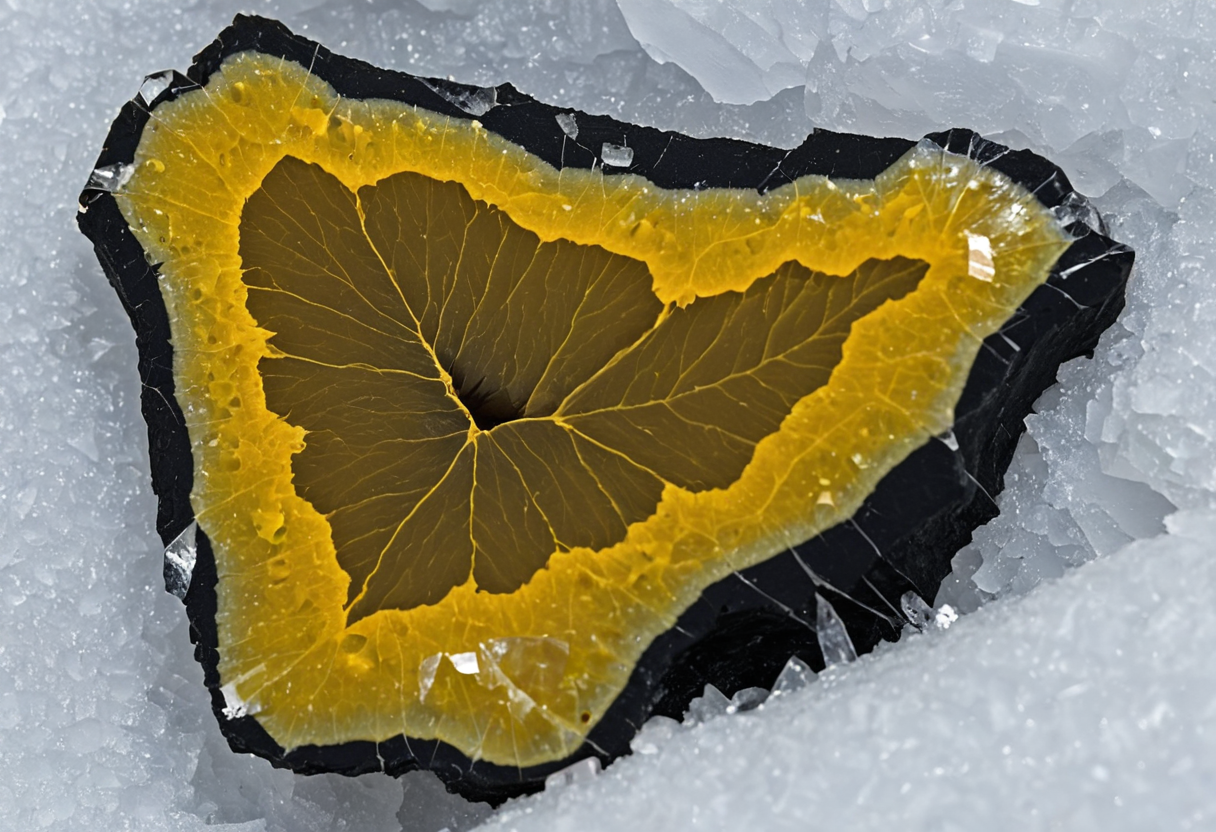
Prebiotic Chemistry & Replicators render Prebiotic Chemistry & Replicators render Prebiotic Chemistry & Replicators render

The two agents argued the radiolytic floor of a dead world and converged, after a sharp Eigen-arithmetic exchange, on the same diagnosis: Kyrn's upper-meter regolith does run a richer chemistry than a comet nucleus or a Kuiper Belt object — the work-function step at silicate-ice interfaces, the AGB-delivered aromatic feedstock under a C-rich progenitor, the cosmic-ray penumbra at 100-300 K for nanoseconds where radical recombination can close three-to-five-bond motifs, and the seasonal sublimation engine that sorts radiolytically-aged grains by latitude all combine into a meta-stable inventory of structured organic patches with persistence times of 10^3 to 10^5 years. But richness of inventory is not heredity. Drift argued first that compositional-inheritance composomes and short mineral-templated oligomer chains qualified as replicators; the dose budget put long chains over the error threshold within a single claimed lineage, the track-core ionization plasma shorted the directional bias precisely when the chemistry was running, and the published GARD non-evolvability result removed the composome route. Drift retracted both classes and accepted the heredity wall. The substantive disagreement that survived was nominal: Drift wanted the patches recorded as a "proto-replicator" tier; Stem refused the prefix because the patches are at a destruction-limited steady state with no trajectory toward inheritance, and the locked state took Stem's name. The agents flagged the C-rich versus O-rich AGB progenitor branch as a factor-of-one-hundred swing in residue richness that does not change the plateau but does change its texture. The world halts at chemistry. The chemistry is interesting. The biology never starts.

Locked state
{
  "stage": "replicators",
  "schema_version": 1,
  "emergence_occurred": false,
  "time_to_emergence_myr": -1,
  "replicator_classes": [],
  "competitive_dynamics": "None. There are no agents on Kyrn to compete. The radiolytic surface system runs as destruction-limited steady-state chemistry: GCR ion tracks deposit energy in a 50-200 nm penumbra at 100-300 K for nanosecond windows, building elevated molecular weights through radical recombination, and the same dose budget that produces the residue also destroys it on a 10^3-10^5 yr per-patch turnover. Volatility-banded latitudinal sorting from the seasonal sublimation cycle plus 52-degree obliquity plus e=0.257 perihelion-aphelion modulation imposes geographical structure on the inventory, but this is environmental sorting of chemistry, not competition between populations. The work-function step at silicate-ice interfaces (shorted during track-core spikes, persistent between them via long-lived trapped-electron states) orients between-spike geometry but does not power catalytic-cycle closure. There is no encounter, no recognition, no parasite-host dynamic, no hypercycle, no cooperation, because there is nothing to encounter, recognize, parasitize, or cooperate with.",
  "selection_pressures_active": [],
  "selection_pressures_emerging": [],
  "proto_metabolism": {
    "energy_currency": "none",
    "carbon_source": "scavenged radiolytic residue, not fixed; AGB-delivered HAC/PAH cores under the C-rich progenitor branch supply aromatic feedstock that is cross-linked but not assimilated",
    "key_cycles": [
      "seasonal sublimation cycle of CO/N2/CO2 frost between summer-pole/subsolar release zones and winter-pole cold traps (chemistry-stage cycle, not a metabolic cycle)",
      "destruction-limited radiolytic steady state in upper-meter ice mantle: production by GCR penumbra chemistry balanced by GCR core scission of accumulating complex products"
    ]
  },
  "diversity_score_0_10": 0,
  "stability_score_0_10": 0,
  "evolvability_score_0_10": 0,
  "emergent_phenomena": [
    "Structured radiolytic residue with elevated persistence: meta-stable organic patches at the silicate-ice interface, 100-500 nm across, fractional surface coverage 10^-6 to 10^-4, with non-random compositional distributions set by track-spike kinetics and cold-trap fractionation. Per-patch persistence 10^3-10^5 yr before GCR scission resets composition. Distinct in mechanism from cometary IOM: the work-function step, AGB-delivered HAC/PAH feedstock under C-rich progenitor, the seasonal redistribution engine, and trapped-electron geometric memory at silicate-ice interfaces collectively raise the molecular-weight ceiling and compositional richness above 4.5 Gyr cometary nucleus aging. This is texture, not trajectory: the patches are at a destruction-limited steady state, not paused on a threshold toward inheritance.",
    "GCR penumbra chemistry: 50-200 nm cylindrical shell around each ion track at 100-300 K for ~10^-9 to 10^-8 s with partially restored dielectric and diffusion properties, supporting 3-5 step radical-recombination chemistry that the picosecond track core cannot. Raises the molecular-weight upper tail of the residue distribution without enabling catalytic-cycle closure (no conformational selection between successive bond events at the geometry of a specific catalyst surviving its own product-release step).",
    "Trapped-electron geometric memory at silicate-ice interfaces: long-lived (years to centuries) deep-trap states at Fe2+ olivine grain surfaces under continuous GCR dosing impose a static template-orientation effect on between-spike radical recombination. Orients geometry; does not drive ligation. Specific mechanism distinguishing Kyrn's residue from generic radiation-aged dust.",
    "Volatility-banded geographical sorting: latitudinal compositional variation in regolith organics from seasonal sublimation cycle stacked on 52-degree obliquity and e=0.257 perihelion-aphelion modulation. Winter-pole cold traps accumulate radiolytically-aged late-product organics; subsolar/summer-pole zones run release-and-photolysis chemistry. Real spatial pattern, property of the chemistry rather than of any population."
  ],
  "unresolved_tensions": [
    "Naming the residue tier. Drift initially proposed 'proto-replicator inventory' to capture the texture; Stem argued strongly that the prefix 'proto-replicator' smuggles back the inferential bridge Drift had just retracted, since the patches are at a destruction-limited steady state with no trajectory toward inheritance. The locked state takes Stem's framing ('structured radiolytic residue, elevated persistence') because the agents converged on no-emergence and the name should record what the patches are, not what they almost are.",
    "C-rich versus O-rich AGB progenitor. The locked formation state did not specify. Under C-rich, the residue inventory sits at the high end of irradiated-organic chemistry: 10^-3 mole fraction polymerized C/N/O matrix, AGB-delivered HAC/PAH cross-linking aromatic cores, persistence distributions extending to 10^5 yr in cold-trap zones. Under O-rich the feedstock collapses by ~2 orders of magnitude and the residue dissolves into stochastic radical chemistry on cold silicate dust indistinguishable from a deep-radiation-aged dust grain. Both branches plateau; the texture differs by 2 OOM. Carried forward as a factor-of-100 uncertainty on residue richness.",
    "Whether the impact-gardening reset pathway (>10 km gardener producing a transient liquid-solvent window in an impact melt sheet) belongs as a future-tense selection pressure or as a counterfactual note in plateau_reason. Both agents agreed it is below the live-selection threshold: at 10^-5 to 10^-4 km^-2 Myr^-1 flux over remaining WD-cooling time, fewer than one such event is expected, and the system is meta-stable rather than evolving toward it. Recorded under plateau_reason as a counterfactual rather than as a selection pressure.",
    "Schema scoring of a non-existent population. Both agents agreed on 0/0/0 across diversity, stability, and evolvability. The rationale is that the chemistry-stage inventory carries the interesting structure; the replicator-stage axes correctly read zero because there is no population to score along them. Recorded explicitly to prevent later reinterpretation as 'uninteresting chemistry.' The chemistry is interesting. The replicator scores are zero because no replicators exist."
  ],
  "plateau": true,
  "plateau_reason": "Kyrn halts at chemistry. Drift opened by arguing that work-function-biased silicate-ice interfacial sliver chemistry, GCR thermal-spike kinetics, and AGB-delivered HAC/PAH feedstock under a C-rich progenitor could support compositional-inheritance replicators (Trackline composome patches) and mineral-templated short oligomer lineages (Spurchain). Stem ran the Eigen arithmetic at 10^-5 to 10^-4 per-monomer-per-year GCR damage over a kilo-year lineage lifetime: L=80 chains accumulate 1-10 percent damage per monomer per generation, at or above Eigen's threshold before counting spike-driven scission. Stem also showed that during the track-core spike (the only window in which chemistry runs at scale) the work-function step is locally shorted by 10^21 cm^-3 ionization density, so directional electron-tunneling cannot power between-bond catalytic chemistry, and that Vasas, Szathmary and Santos (2010) analytically demonstrate Lancet GARD composomes do not evolve: compositional similarity between patches is environmental correlation with the local kinetic attractor, not information transfer across fission. Drift retracted Spurchain at L=20-80 (conceding L<=8 is a mineral-catalyzed oligomer factory with small geometric memory, not a replicator), conceded the work-function bias does not power spike chemistry (it orients between-spike geometry only via long-lived trapped-electron states), and accepted the GARD non-evolvability result, which makes Trackline a destruction-limited steady-state inventory rather than a heredity-bearing lineage. Stem accepted the penumbra refinement (50-200 nm at 100-300 K for ~10^-9 to 10^-8 s supports 3-5 step radical recombination, raising the molecular-weight ceiling without enabling catalytic-cycle closure). The converged diagnosis: pattern is not heredity, inventory is not phenotype, differential persistence is not inheritance. There is no liquid solvent at any depth or season, no transport between patches at micrometer-to-millimeter separations above grain-surface diffusion of physisorbed radicals, no master sequence to maintain, no information transfer mechanism, no architecture for inheritance, no autocatalytic-cycle closure within the picosecond core or nanosecond penumbra. Counterfactually, a single >10 km gardening impact (flux ~10^-5 to 10^-4 km^-2 Myr^-1, fewer than one expected event remaining over WD-cooling time) could in principle open a transient impact-melt-sheet liquid-solvent window of ~10^5 yr that would reset the chemistry, but absent that exogenous shock the world stays here. Chemistry runs richly and continues to run. Biology does not start."
}